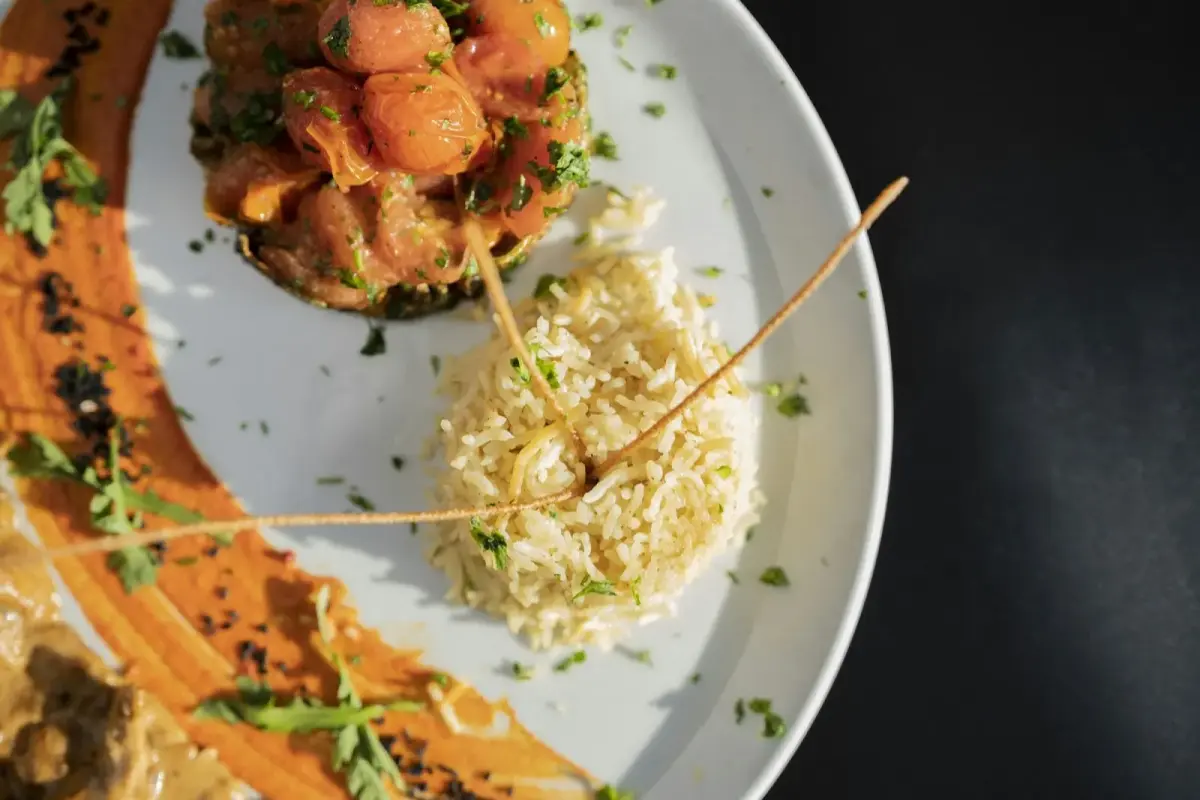
In Morocco, couscous may be crowned with carrots, zucchini, and pumpkin. In Tunisia, the sauce takes on a deep red color from tomatoes and spices, and along the coast it is often served with fish. In Algeria, the flavor changes from the Mediterranean shore to the Sahara. In Mauritania, wheat may give way to millet or sorghum.
At first glance, these seem like four different dishes. But step into the kitchen, and the differences begin to fade. Everywhere, the same sequence unfolds: grain is moistened, rolled by hand into tiny granules, sifted, steamed, and finally placed at the center of the table.
It is this tradition—not a single recipe—that UNESCO recognized as the shared heritage of Morocco, Algeria, Tunisia, and Mauritania.
Best time to go: Fridays & feast days. The same steamed grain unites four North African nations, and no two households season it quite the same way.
A Heritage Without a Single Owner
UNESCO did not recognize a recipe or declare one version of couscous to be the authentic one. Instead, it recognized the knowledge, skills, and social practices involved in making and sharing couscous.
That distinction matters. What is being preserved is not only a list of ingredients, but also the movements of experienced hands, the traditional utensils, the customs surrounding the meal, and the ways these skills are passed from one generation to the next.
The origins of couscous are generally linked to the ancient Amazigh communities of North Africa. Their traditions long predate the borders of today’s countries, which is why asking which nation “owns” couscous is ultimately the wrong question.
Couscous has no single nationality. It is older than the states that now proudly call it their own.
How Grain Becomes Couscous
Traditional couscous does not begin with opening a packet from the supermarket.
Semolina is spread across a large shallow dish and lightly sprinkled with water. With gentle circular movements, the grains are rubbed together until tiny pellets begin to form. The mixture is then sifted. Larger clumps are broken apart, while the smallest grains are returned to the dish and worked again.
The process continues until the granules become remarkably even in size. They are then placed in the upper chamber of a two-tiered steamer. Below, broth or sauce simmers slowly, while fragrant steam rises through the perforated basket, gradually cooking the couscous above.
Several times during cooking, the grains may be removed, loosened by hand, lightly moistened, and returned to the steam.
An experienced cook knows the right moment not simply by watching the clock, but by the feel of the grains, their aroma, and the way they separate between the fingers.
That is why this tradition can never be fully preserved in a written recipe alone.
One Language, Many Dialects
In Morocco, couscous may be served with meat, vegetables, chicken, or even sweet toppings. Algeria offers dozens of regional variations, featuring dried meat, fermented dairy products, fish, offal, or the finer-grained version known as mesfouf.
Tunisia often favors richer sauces seasoned with tomatoes and harissa, while coastal regions frequently pair couscous with fish or seafood. In Mauritania, the same technique adapts to a pastoral and desert landscape, where millet or sorghum may replace wheat and local meats and dairy products shape the final dish.
It would be a mistake, however, to assign a single defining flavor to each country. Within Morocco, Algeria, Tunisia, and Mauritania, regional diversity is often greater than the differences between the countries themselves.
The ingredients may change, but the grammar of the dish remains remarkably familiar: grain, water, steam, patience, and hands that know exactly what comes next.
Why It Is Rarely Made for Just One Person
Couscous has never been only about food.
It appears at weddings, family gatherings, religious celebrations, and meals prepared to welcome guests. In Morocco, it is especially associated with Fridays, when families gather after communal prayers. A large platter is placed in the middle of the table, transforming lunch from a collection of individual servings into a shared experience.
This is why UNESCO speaks of hospitality, solidarity, and community. The true value of couscous lies not only on the plate, but also in everything that happens around it.
The dish quietly holds families together. Through its preparation, children learn by watching older generations. Skills are passed on without formal lessons, simply by standing nearby, helping, and repeating the same gestures year after year.
What Is Lost When Only the Packet Remains
Today, couscous can be prepared much more quickly. Factory-produced grains eliminate the long hours once spent rolling, sifting, and drying them by hand, making the dish far easier to prepare in modern cities.
Yet something else may disappear along with that labor.
When families no longer make couscous from scratch, children lose the opportunity to observe experienced hands at work, to learn how damp the grains should feel, and to absorb techniques that were once passed down naturally around the kitchen table.
Today, many of these traditions survive through women’s cooperatives, cultural associations, and cooking workshops. The knowledge is no longer preserved only within the family, but it continues to live.
UNESCO’s goal is not to discourage modern convenience or insist that everyone cook exactly as their ancestors did. It is to preserve something deeper than the finished dish: the knowledge, the memory, and the simple habit of bringing people together around one shared meal.
Each of the four countries seasons its couscous differently. The vegetables, meats, spices, and grains may all change from one table to the next.
But everywhere, the same familiar movements of the hands remain. And in the center of the table, there is still room for someone else.