Best time to go: Year-round. A coffee so small it's gone in minutes, and a conversation so unhurried it can outlast the cup by hours.
A Drink That Ends Before the Conversation Does
Picture a table where the coffee is already gone. At the bottom of a small porcelain cup, a layer of dark grounds has settled. The glass of water beside it is almost empty. Yet no one is getting up. The coffee was finished several minutes ago, but the real reason everyone gathered is still unfolding.
That may be why Turkish coffee found its place on UNESCO’s Representative List of the Intangible Cultural Heritage of Humanity. It wasn’t because of a unique brewing method or elegant cups. It wasn’t even because of its distinctive flavor. UNESCO recognized an entire tradition in which a single cup becomes a reason to welcome guests, spend time with family, celebrate important occasions, and, above all, enjoy an unhurried conversation.
This is one of those stories where what matters most is not inside the cup, but around it.
What UNESCO Actually Recognized
When people hear that Turkish coffee is protected by UNESCO, they often imagine an old recipe being carefully preserved. In reality, the inscription is called “Turkish coffee culture and tradition,” and the word culture is far more important than the word coffee.
UNESCO is not protecting the drink alone. It recognizes the entire cultural practice surrounding it: the way it is prepared, the way it is served, the traditions of hospitality it represents, its role in everyday life, and the knowledge that continues to be passed from one generation to the next. Children grow up watching coffee being prepared at home. Over time, they learn to make it themselves, eventually serving it to their own guests.
The remarkable thing is that what UNESCO considers worth preserving is not simply a brewing technique, but a habit of bringing people together.
Why Turkish Coffee Is Unlike Any Other
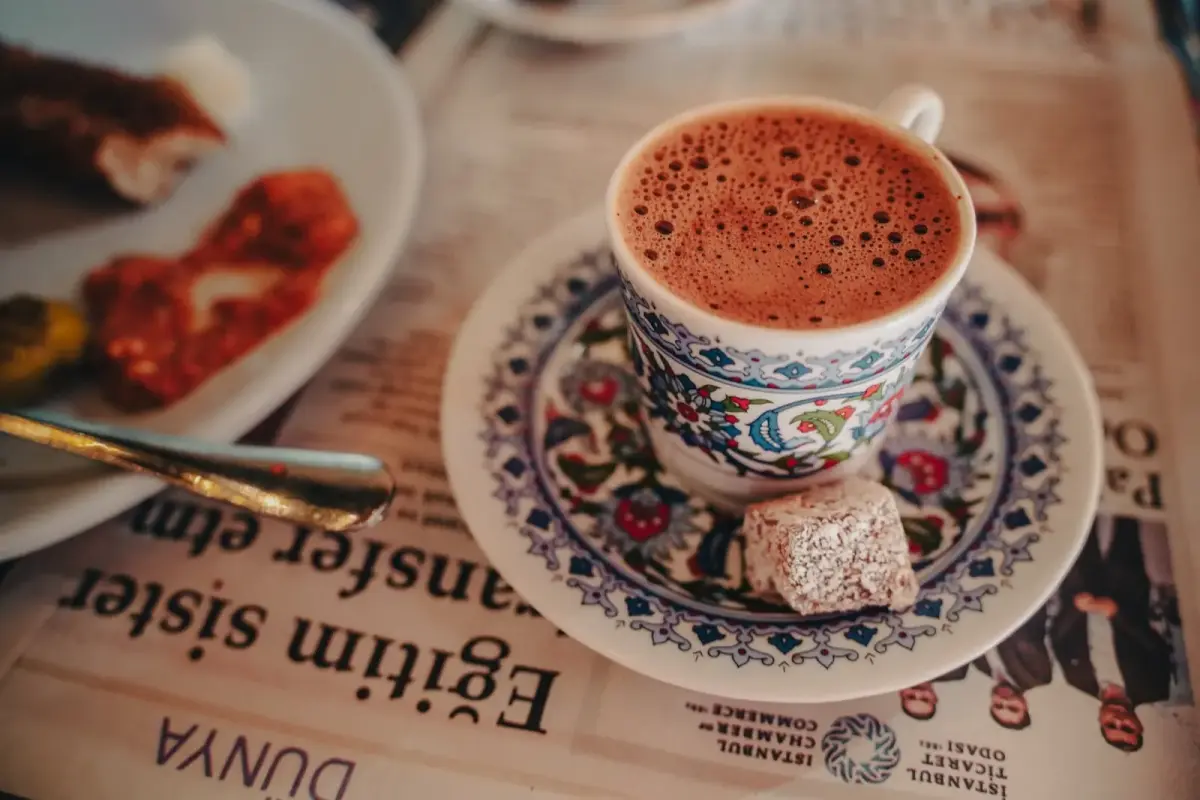
The process itself seems surprisingly simple. Finely ground coffee is mixed with cold water, and sugar—if desired—is added from the very beginning. The mixture is then heated slowly in a small metal pot called a cezve.
The goal is not to let the coffee boil vigorously. Instead, it is warmed gently until a rich layer of foam forms on top. Once ready, it is poured directly into small cups without being filtered, leaving the coffee grounds to settle naturally at the bottom.
Today there are countless ways to make coffee more quickly, but Turkish coffee seems almost designed to resist haste. While the cezve slowly warms over the heat, there is already time to greet your guests and begin talking. By the time the first sip is taken, no one is thinking about leaving.
How One Small Cup Became a Place to Meet
In many countries, coffee is simply part of a morning routine or a quick break during the workday. The Turkish tradition tells a different story. Here, coffee has always been about people.
It is prepared when guests arrive. It accompanies family gatherings and visits with friends, neighbors, and relatives. Historically, coffeehouses became an essential part of this culture. They were never just places to buy a drink. People came to discuss the news, read books, play games, exchange ideas, and spend hours in one another’s company.
There is an interesting paradox here. Remove the coffee, and the conversation may still happen. Remove the gathering itself, and the coffee loses much of its meaning.
That relationship between a simple drink and the act of spending time together is what UNESCO chose to preserve.
Coffee at Life’s Most Important Moments
In Turkey, coffee is more than something people drink during an ordinary afternoon. It also accompanies many of life’s important moments.
Serving coffee to guests remains one of the simplest expressions of hospitality. Preparing it is a gesture of welcome, and accepting it is an invitation to slow down and share time together.
Coffee also plays a special role in traditional engagement ceremonies. During the meeting between the two families, the bride-to-be prepares coffee for the groom. In many parts of Turkey, she may secretly replace the sugar in his cup with salt. If he drinks it without complaint, it is seen as a lighthearted sign of patience, respect, and good humor. Today, the tradition is often playful, but it remains one of the country’s best-known customs.
Even after the final sip, the ritual is not quite over.
Because Turkish coffee is never filtered, a layer of grounds settles at the bottom of the cup. Many people still turn the cup upside down, wait for the grounds to cool, and then “read” the patterns they leave behind. Whether taken seriously or simply enjoyed as a game among friends, fortune-telling has become another tradition that extends the conversation long after the coffee itself is gone.
Where to Experience Turkish Coffee
The best way to discover this tradition is not in a tourist attraction but in a place where coffee is still part of everyday life.
Istanbul is the natural place to begin. Historic cafés in neighborhoods such as Eminönü, Beyazıt, Fatih, Beşiktaş, and Kadıköy offer a chance to watch locals spend far more time over a single cup than it takes to drink it.
If you prefer a quieter atmosphere, smaller towns across Turkey often provide an even more authentic experience. There, Turkish coffee is not presented as a cultural performance—it simply remains part of daily life.
In many cafés, your coffee will arrive with a glass of water and sometimes a small piece of Turkish delight. Don’t be surprised if your empty cup is left on the table for a while. If you’re curious, someone may even offer to read your fortune from the coffee grounds—a tradition that is still alive in many families and neighborhood cafés.
A few tips before you order your first cup:
Don’t stir the coffee after it is served. The grounds have already begun settling at the bottom.
Drink slowly, and don’t feel obliged to finish the last sip. The final mouthful usually contains the coffee grounds.
If you want your coffee unsweetened, ask for sade. Az şekerli means lightly sweetened, orta means medium sweet, and şekerli means sweet.
Don’t judge Turkish coffee by the size of the cup. It is served in small portions because the drink is rich and concentrated.
Why UNESCO Protects More Than Coffee
Today, almost any coffee machine can produce an excellent cup of coffee. What no machine can create is the tradition that surrounds it.
It cannot recreate the habit of welcoming guests with a freshly prepared cup. It cannot pass knowledge from grandparents to grandchildren. It cannot turn an ordinary afternoon into hours of conversation or make a simple drink part of an engagement ceremony, a family visit, or a friendship.
That is why UNESCO did not recognize Turkish coffee simply because of the way it tastes.
It recognized a tradition that reminds people to slow down, gather around the same table, and make time for one another. Sometimes, a small cup of coffee is enough to keep a conversation going long after the last sip.