Best time to go: Spring harvest, before Qingming. Before the water ever meets the leaf, a Chinese tea picker has already made the decision that decides the whole cup.
Why Great Tea Begins Long Before the Teapot
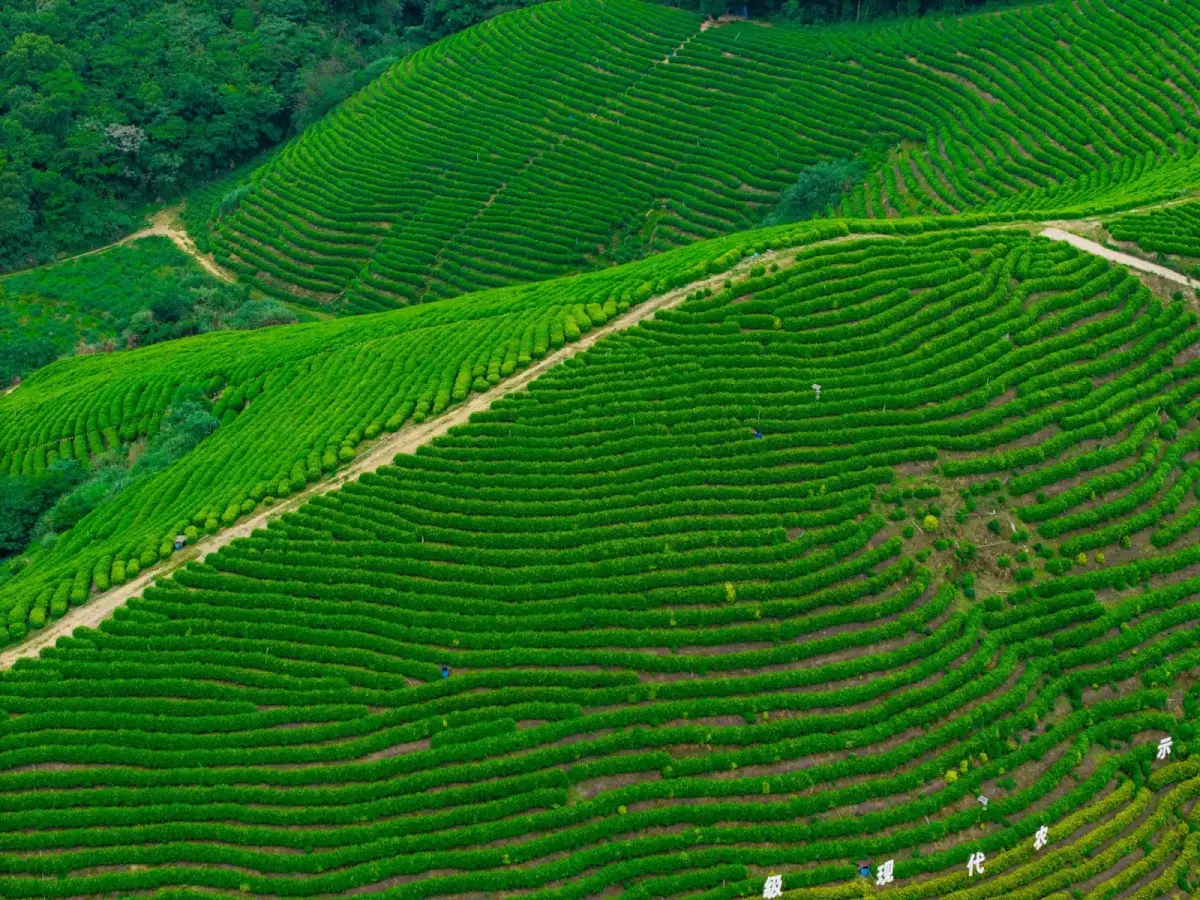
In spring, China’s tea mountains wake before most people do. Morning mist still hangs over the bushes as tea pickers quietly make their way along the slopes, woven baskets resting on their backs.
From a distance, their work looks simple. Thousands of green leaves surround them. All they have to do is pick them.
But after watching for a few minutes, you realise they are doing something entirely different.
They pass by most of the leaves. A hand reaches toward a branch, then stops. One leaf has already grown too large. Another is still too young. Only occasionally do their fingers gently pluck a single tender shoot—a bud and two young leaves.
This is where many of China’s greatest teas begin.
In 2022, UNESCO inscribed the traditional tea processing techniques and associated social practices in China on the Representative List of the Intangible Cultural Heritage of Humanity. And this tradition begins long before water is ever poured into a teapot.
When a Few Days Can Determine a Year’s Value
For some of China’s most celebrated teas, value is measured in just a few days each year.
One of the best examples is Pre-Qingming tea, harvested before the Qingming Festival in early April. Tea picked during this short window is far more valuable than leaves harvested only a week or two later. By then, the bushes have already produced new growth, changing the leaves’ chemical composition, aroma, and flavour.
It creates an unusual situation where price is determined not only by the variety or the place where the tea is grown, but also by a few specific days on the calendar.
That is why the beginning of the spring harvest is the most important season of the year for many tea producers.
Different Teas Begin with Different Leaves
It is easy to assume that all tea is harvested in the same way. In reality, choosing the right leaves is one of the most important parts of the entire process.
White teas are often made from only a bud or a bud with a single young leaf. Most green teas are picked as a bud with two leaves. Many famous oolongs, however, require more mature leaves because they develop their complex aromas during partial oxidation.
The remarkable part is that all of these teas may come from the very same tea bushes.
The difference begins with the leaves that are chosen.
Machines Can Harvest. People Can Select.
Modern harvesting machines can collect in a few hours what a person could never gather in days.
But machines cannot make decisions.
They cut everything in their path. They cannot distinguish between a perfectly timed young shoot and a leaf that has already matured too far. For mass-produced tea, this is often acceptable. For China’s finest teas, it is not.
That is why many of the country’s most prestigious teas are still harvested entirely by hand. The value lies not in speed, but in making thousands of careful decisions every single day.
Why UNESCO Protects More Than Tea
China produces enormous quantities of tea, but UNESCO is not protecting the drink itself or any particular variety.
Instead, it safeguards centuries of knowledge: knowing exactly when to begin harvesting, understanding which leaves are suitable for each style of tea, caring for tea bushes so they continue producing for decades, and passing these skills from one generation to the next.
A great cup of tea is never the result of chance.
It begins with the very first decision made in the tea fields.
Where to See the Tea Harvest in China
Spring is the best time to experience this tradition firsthand.
The hills around West Lake in Hangzhou are home to the famous Longjing (Dragon Well) tea. In the Wuyi Mountains, tea growers harvest the leaves that become the region’s celebrated rock oolongs. In Anxi County, visitors can watch the production of Tieguanyin, one of China’s best-known oolong teas.
Wherever you go, you are likely to notice the same remarkable scene.
Among thousands of seemingly identical leaves, experienced hands patiently search for only a few—the leaves that will eventually become a tea capable of capturing the taste of a single Chinese spring.