Best time to go: Spring & summer. In Slovenia, beehives are painted like tiny houses — because for generations, the bees have been treated like family.
The Most Unusual House in a Slovenian Village
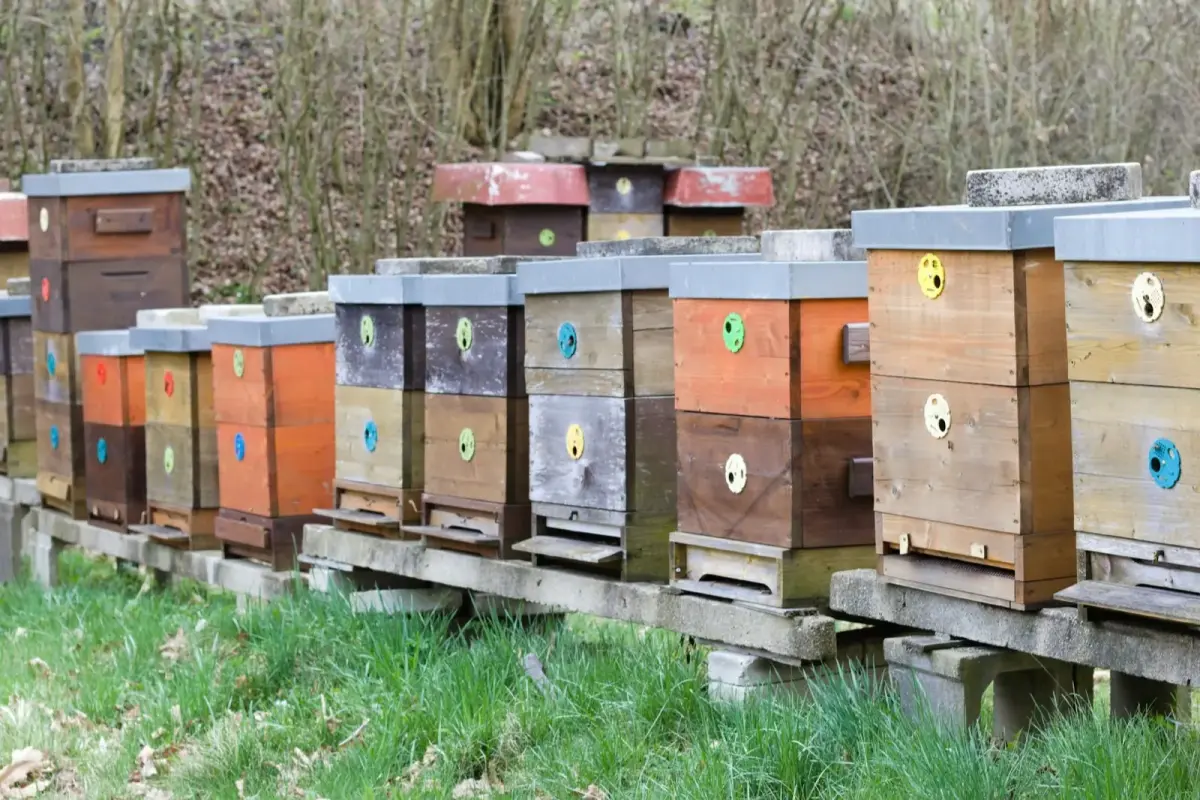
Drive through a Slovenian village and you may notice small wooden houses standing beside ordinary homes. They are neatly painted, sometimes decorated with carved details, and look almost like miniature cottages.
Only they were never built for people.
They are beehives.
In many countries, a beekeeper builds a hive with the bees’ needs in mind. In Slovenia, the idea evolved even further. Here, people developed entire bee houses, where dozens of hives are protected together under one roof from rain, snow, and the summer sun.
Over time, these structures became such a familiar part of the Slovenian landscape that it is difficult to imagine a village without them. This close relationship between people and bees led UNESCO to inscribe Slovenian beekeeping traditions on the Representative List of the Intangible Cultural Heritage of Humanity in 2022.
When Beekeeping Becomes Part of a Nation’s Character
Slovenia is a small country, yet its relationship with bees is unlike that of almost anywhere else in Europe.
Tens of thousands of Slovenians keep bees. For many of them, beekeeping is neither a large business nor simply a source of income. Instead, it is a family tradition that has often been passed down through generations.
It is no coincidence that Slovenia was the country that proposed the creation of World Bee Day. Today, it is celebrated every year on 20 May, the birthday of Anton Janša, an eighteenth-century Slovenian pioneer whose ideas helped shape modern beekeeping.
For Slovenians, caring for bees has long been part of their national identity.
The Paintings That Welcome the Bees
There is another feature of Slovenian beekeeping that is rarely found anywhere else.
The front panels of traditional beehives are often painted with colourful scenes. Saints, farmers, animals, historical events, folk tales, and even humorous stories appear on these small wooden boards.
Originally, the paintings helped beekeepers distinguish one hive from another. Over time, however, they became a unique form of Slovenian folk art.
Today, thousands of these painted hive panels are preserved in museums. Together they tell not only the story of beekeeping but also the story of everyday life in Slovenian villages over the centuries.
The Bees That Belong to Slovenia
There is another reason why Slovenians care so deeply about their bees.
Slovenia is the historic homeland of the Carniolan honey bee, one of the world’s most respected honey bee subspecies.
Known for its gentle temperament, ability to survive cold winters, and excellent orientation in mountainous landscapes, the Carniolan bee is now kept by beekeepers across many countries.
For Slovenia, however, it is far more than a successful breed. It is considered part of the country’s natural heritage.
Why UNESCO Protects More Than the Beehives
Wooden hives can be placed inside a museum. Painted panels can be preserved behind glass. Yet neither of those things is enough to preserve Slovenian beekeeping.
UNESCO protects the knowledge that allows this tradition to continue: understanding how bees behave, caring for them with patience rather than unnecessary intervention, passing practical skills from one generation to the next, educating new beekeepers, and maintaining a deep respect for nature.
Slovenian beekeepers often say that before you learn how to keep bees, you must first learn how to observe them.
As long as children continue visiting apiaries with their parents, beekeepers keep painting hive panels by hand, and the familiar sound of bees returns to the meadows every spring, this tradition remains alive.
Where to Experience Slovenian Beekeeping
One of the best places to discover this tradition is the Slovenian Beekeeping Museum in the town of Radovljica. Its collection of historic painted hive panels is considered one of the finest in the world, while the exhibitions explain the story of the Carniolan honey bee and the country’s centuries-old relationship with beekeeping.
An even richer experience is to visit one of Slovenia’s family-run apiaries. Many beekeepers welcome visitors, show their traditional bee houses, explain how they care for their colonies, and offer tastings of locally produced honey. It is there that visitors realise UNESCO is not celebrating beautiful beehives or excellent honey. It is recognising a way of living alongside bees that has become part of Slovenia’s cultural identity.