Best time to go: Best seen in winter, drying season. Thin enough to glow with daylight, strong enough to outlive its makers — Japanese washi paper rewrites what paper is for.
The Material We Think of as Fragile
When people think of materials that can survive for centuries, they usually picture stone, bronze, or fired clay. Paper seems like the complete opposite. It tears, wrinkles, absorbs water, and disappears so easily that we rarely associate it with permanence.
Yet Japan has a paper unlike any other. Washi can be almost translucent, soft enough to filter daylight, and so light it seems weightless, while remaining remarkably durable. For centuries it has been used for books and official documents, folding screens, lanterns, sliding doors, and works of art—objects that were meant to last far longer than a single lifetime.
Its greatest paradox is also what makes it extraordinary. One of the thinnest materials humans have ever created is capable of preserving traces of their lives for generations.
Paper That Does Not Begin with Trees
Most modern paper is made from wood pulp. Traditional washi begins somewhere entirely different—with the long inner fibers of plants, especially kōzo, the paper mulberry.
Other varieties of Japanese paper are also made from mitsumata and gampi. However, the three papermaking traditions originally recognized by UNESCO in 2014—Hon-minoshi, Sekishū-banshi, and Hosokawa-shi—are all based on kōzo fibers.
These long fibers intertwine to form a delicate internal network. That is what gives washi its unusual combination of strength, flexibility, and lightness. Its durability is almost invisible, hidden within the structure of the paper itself.
A Sheet That Begins with Winter Bark and Cold Water
A finished sheet of washi looks deceptively simple. A pale white or cream-colored surface gives little hint of the work that came before it.
The process begins with harvesting kōzo branches and stripping away the bark. The dark outer layer is removed, leaving only the pale inner fibers. These fibers are boiled, rinsed in clean water, and carefully inspected by hand until every dark speck and damaged strand has been removed. Finally, they are beaten into a soft pulp of individual fibers.
There is no single dramatic moment in this process. The strength of the finished paper is built through countless quiet decisions. Is the water clean enough? Have the fibers been separated completely? Has every imperfection been removed?
The effortless beauty of washi is, in reality, the result of hours of patient work.
The Art of Even Movement
The prepared fibers are mixed with water and a natural plant-based formation aid that keeps them evenly suspended. The papermaker then dips a wooden mould fitted with a fine bamboo screen into the mixture.
But the mould is never held still.
Instead, it moves continuously—forward, backward, and from side to side. As the water drains away, the long fibers interlock in multiple directions, gradually forming an even sheet. The rhythm of these movements determines whether the paper will have the strength, lightness, and delicate translucency for which washi is known.
From the outside, the process appears calm and almost effortless.
In reality, nothing about it is accidental. The papermaker must feel the weight of the water, the behavior of the fibers, and the gradual formation of a sheet that is still almost invisible.
How Water Becomes Paper
A newly formed sheet is little more than water holding countless floating fibers together.
It is stacked with other wet sheets, gently pressed, carefully separated again, and finally dried.
Traditionally, the paper is dried outdoors on wooden boards under the sun and wind. In the case of Hon-minoshi, natural drying remains an essential part of the craft, although some other varieties of washi today may use mechanical drying.
As the water disappears, the structure created by the papermaker’s movements remains behind. Thousands of individual fibers become a single sheet.
Unlike Murano glass, there is no blazing furnace. Unlike calligraphy, there is no single irreversible brushstroke. Washi comes into being slowly, almost quietly, as though the material patiently assembles itself from nothing more than water and plant fibers.
Why Such Thin Paper Can Last So Long
At first touch, washi feels delicate. Appearances, however, are misleading.
Its long natural fibers make it exceptionally resistant to tearing, repeated folding, and the passage of time.
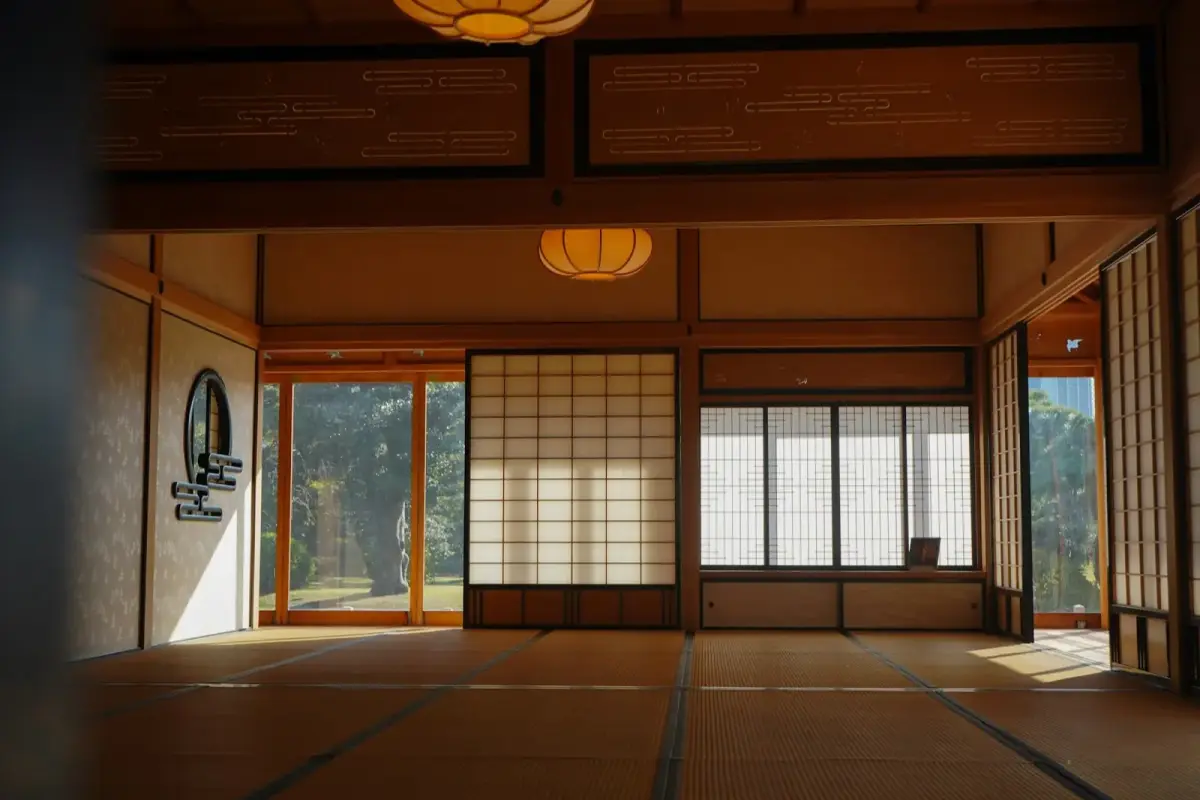
That is why it has never been used only for writing. Washi has long covered the wooden latticework of shōji screens, diffusing daylight into soft illumination. It has been crafted into folding screens, lanterns, fans, books, and decorative objects. UNESCO also emphasizes that washi remains part of everyday life rather than existing solely as a museum tradition.
Light behaves differently when it passes through washi. It does not disappear behind the paper, nor does it enter a room harshly. Instead, it becomes softer, preserving the presence of daylight while gently separating the interior from the outside world.
Its value lies not only in its strength, but also in its ability to transform the atmosphere of a space.
A Craft Sustained by an Entire Community
It is easy to imagine washi as the work of a single artisan standing over a bamboo screen.
In reality, every sheet represents the efforts of an entire community.
Some people cultivate kōzo. Others prepare the bark, maintain the water, process the fibers, or create products that keep handmade paper relevant today. In the villages where washi survives, papermaking has never been an isolated profession. It remains woven into local life itself.
Knowledge is passed from one generation to the next through families, community organizations, and master-apprentice relationships. Today’s papermakers learned their skills from those who came before them, just as future generations continue to learn from them.
The disappearance of a single workshop would therefore mean more than the loss of a craft. It would also mean the loss of the relationships that connect a plant, a river, a village, and the people who have worked together for centuries.
Where to See Washi Being Made
One of the best places to experience this tradition is the city of Mino in Gifu Prefecture. At the Mino Washi Paper Museum, visitors can explore different types of washi, learn about the craft, and even make their own sheet of paper. Papermaking in the region has continued for more than thirteen centuries.
Other historic centers include Sekishū-banshi in Shimane Prefecture and Hosokawa-shi in Ogawa and Higashichichibu, Saitama Prefecture. These communities formed the original Japanese inscription recognized by UNESCO in 2014. In 2025, the inscription was expanded into a broader national recognition that includes additional communities continuing the tradition of handmade washi.
The best way to understand washi is not by buying a lantern or a postcard.
It is by watching strips of kōzo bark become floating fibers, seeing those fibers gather in water, and witnessing the moment when an almost invisible sheet first appears on the bamboo screen.
After that, paper never looks quite the same again.
Why UNESCO Protects More Than Paper
UNESCO did not recognize a sheet of paper as cultural heritage.
A single sheet can be preserved in a museum display case. That alone is not enough to preserve washi.
What UNESCO protects is the knowledge itself: how to cultivate the right plants, prepare the fibers, understand the movement of water, and form each sheet entirely by hand. It also protects the communities that continue to pass these skills from one generation to the next.
Every sheet of washi begins as something almost without form—countless tiny fibers drifting through water.
Human hands bring those fibers together into a material capable of preserving words, shaping light, and outlasting the people who created it.
Perhaps that is why Japanese paper only appears fragile—until you discover how it is made.