Best time to go: Workshops year-round. In Indonesian batik, the pattern is drawn first in wax and absence — the artist decides where colour is forbidden to go, long before it decides where colour goes.
A Picture That Appears in Reverse
When an artist paints a picture, they pick up a brush and gradually add color. With every new brushstroke, the image comes closer to completion.
Indonesian batik works in almost the opposite way.
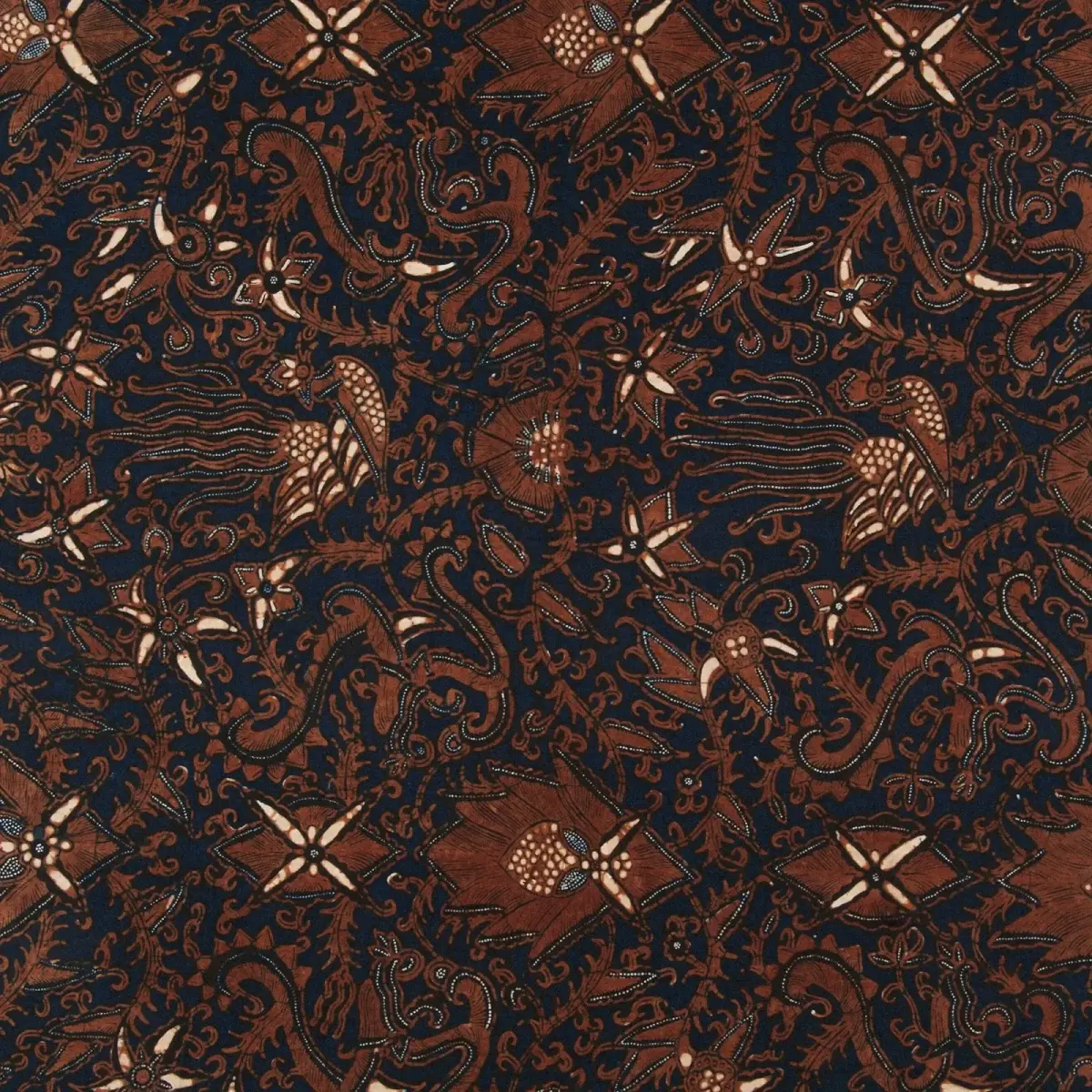
The process begins not with color, but with a decision: which parts of the fabric should absorb dye, and which should keep the color they already have. Hot wax is carefully applied to selected lines and shapes, preventing dye from reaching the fibers beneath. Only then is the cloth immersed in color. When the wax is finally removed, the pattern is revealed.
It is a remarkable idea. The design emerges not only where color has been added, but also where the artisan deliberately prevented it from ever arriving.
This way of thinking is what made batik one of Indonesia’s most distinctive artistic traditions.
Why Hot Wax Became the Most Important Tool
At first glance, color seems to be the heart of batik. In reality, everything begins with wax.
The wax is heated until it becomes liquid, then applied using a traditional tool known as a canting—a small copper reservoir with a fine spout that allows the wax to flow slowly onto the fabric. Guided entirely by hand, it enables the artisan to create delicate lines, dots, and intricate details.
For repeating patterns, another tool is used: the cap, a hand-crafted copper stamp. Its surface is coated with hot wax and pressed onto the cloth, transferring an entire section of the design in a single movement.
As long as the wax remains on the fabric, it acts as a temporary shield. Dye penetrates the exposed fibers while leaving the protected areas untouched.
That is why a batik image is not painted with color. It is created by controlling where color is allowed to travel.
Why a Single Piece of Cloth Is Dyed Again and Again
A simple two-color batik may require only one stage of waxing and dyeing. More elaborate designs, however, follow a much longer sequence.
After the first dye bath, the artisan decides which areas should keep their existing color, which should be opened to receive the next one, and where fresh wax must be applied. Depending on the technique, some wax is removed between stages, while other sections remain protected until one of the final dye baths.
The fabric is then immersed in dye once again.
Every new stage requires the protection of the cloth to be carefully reconsidered. A mistake made at the very beginning may not reveal itself until the final layer of wax is removed—long after it can no longer be corrected.
That is why complex hand-made batik often takes weeks to create, while exceptionally intricate pieces may require several months. The finished pattern appears gradually, layer by layer, as though it had been hidden inside the fabric all along.
Why a Printed Pattern Is Not Yet Batik
Today, any traditional batik motif can be reproduced by industrial printing. From a distance, printed fabric may look almost identical to a handmade piece.
Strictly speaking, however, it is not batik.
In traditional batik, the design is formed during the dyeing process itself. Wax does not place an image on top of the fabric. Instead, it determines which fibers will absorb dye and which will preserve their previous color. The pattern is born from the process itself rather than from an image printed onto the surface.
Handmade batik often reveals itself through subtle differences in line thickness, the density of color, and the repetition of individual elements. These are not necessarily imperfections. They are reminders that every movement was made by a human hand rather than by a machine.
Sometimes fine cracks appear in the wax, allowing a small amount of dye to seep through. Once the wax is removed, delicate vein-like lines remain across the cloth. In some compositions artisans create this effect intentionally; in others they try to avoid it.
These lines do not, by themselves, prove that a textile is handmade. Yet in genuine batik they can preserve the trace of a particular moment in the process—the instant when hardened wax gave way and the dye found its path through.