Best time to go: Workshops year-round. Long before glass, a Korean house was built from paper — windows, lanterns, even furniture, all shaped from a single extraordinary material.
A World Where Paper Was Everywhere
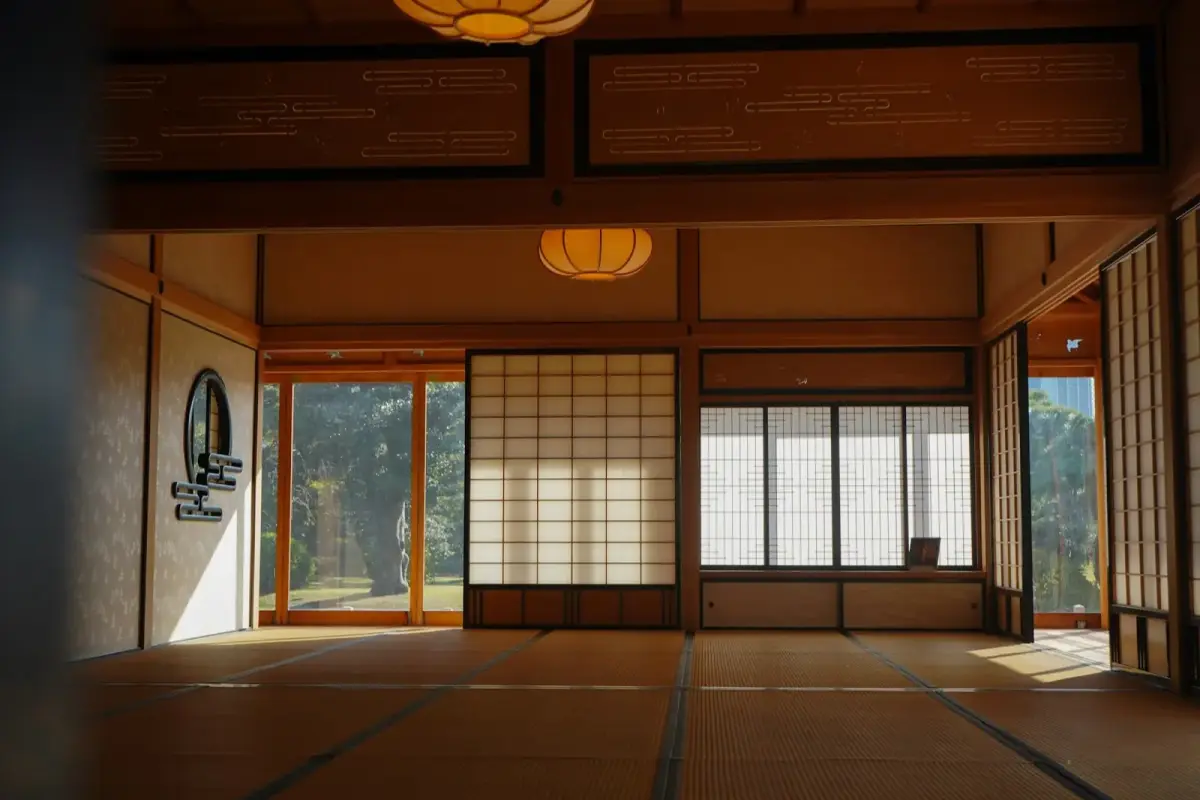
Imagine stepping into a traditional Korean house early in the morning. Sunlight does not pour through the windows in sharp beams. Instead, it passes gently through paper screens, softens, and spreads across the floor as a quiet, milky glow. Light paper partitions divide the rooms, neatly crafted storage boxes sit nearby, and in the evening the house is illuminated by lanterns covered with paper.
At first glance, it seems that paper serves only a decorative purpose. In reality, it closes windows and doors, divides living spaces, stores belongings, diffuses light, and even becomes part of the furniture. While most cultures associated paper primarily with writing, in Korea it surrounded everyday life in countless different forms.
This paper is called hanji. Its story is not remarkable simply because well-made sheets can last for centuries. What makes it extraordinary is something else entirely. Korean craftspeople discovered possibilities in paper that extended far beyond books and calligraphy.
The Word “Paper” Is Misleading
Today we think of paper as a fragile material. A sheet tears easily, wrinkles without effort, absorbs water, and rarely seems suitable for an object meant to survive daily use. The idea of paper windows or paper furniture sounds almost absurd.
Hanji is made from the inner bark of the paper mulberry tree. Its fibers are much longer than those found in most modern papers, creating a dense, interwoven structure throughout the sheet. The material remains light and thin, yet it withstands stretching and repeated folding far better than the paper we use every day.
That is why comparing hanji to office paper makes little sense. They may belong to the same category, but they behave in completely different ways. Hanji exists somewhere between paper, fabric, and a finely woven fiber material whose properties can be adapted for different purposes.
How a Single Sheet Became Dozens of Objects
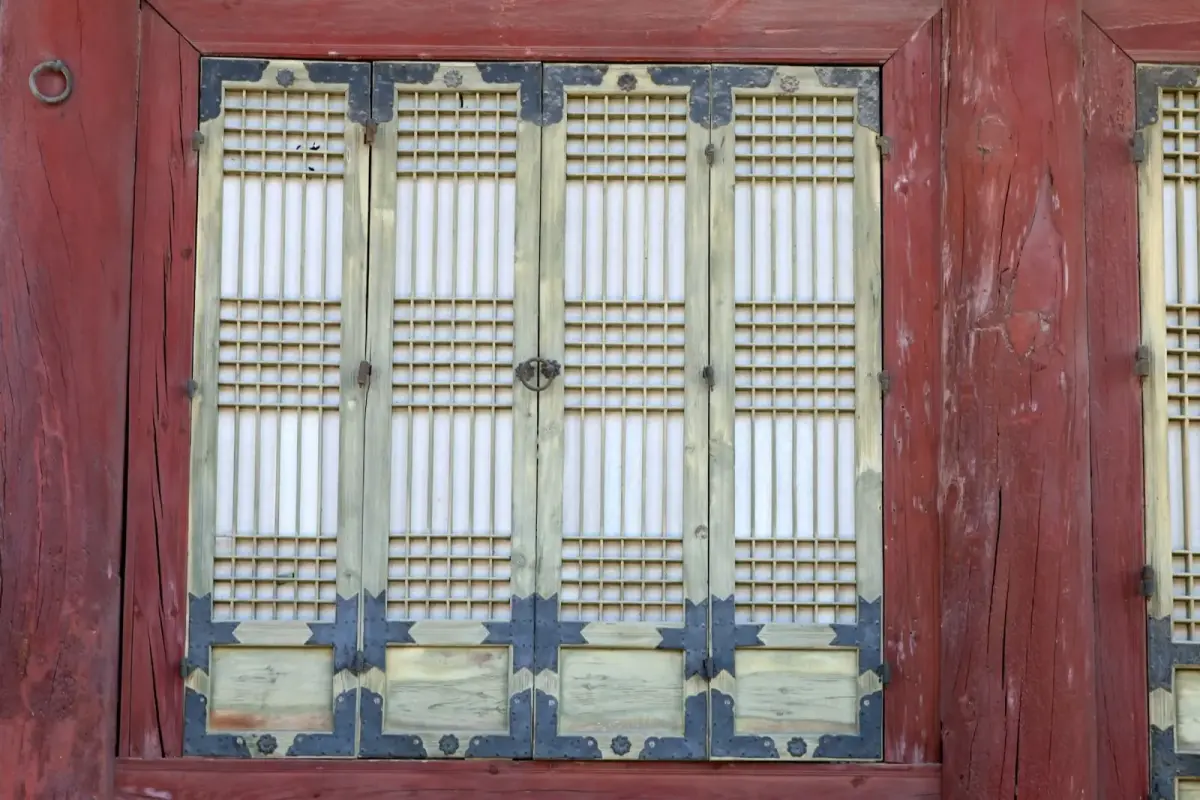
For windows, hanji was stretched across wooden lattice frames to form translucent panels. It did not provide a clear view outside, but it softened harsh sunlight and allowed air to pass through the material. Instead of creating a transparent barrier between the house and the outdoors, it formed a glowing layer that gently connected the two.
A hanji window did not reveal the landscape itself. Instead, it brought nature indoors through shifting light, moving shadows, and the subtle movement of the paper in the breeze. The passing of morning, clouds, or evening could be sensed without ever looking outside.
Windows, however, were only the beginning. Hanji was transformed into folding screens, lampshades, fans, storage boxes, cases, trays, baskets, and decorative vessels. Craftspeople layered it over wooden frames, twisted it into strong cords, and wove those cords together until an ordinary sheet became a completely different object.
Furniture Light Enough to Lift with One Hand
Paper furniture did not mean that cabinets or tables were built from a few thin sheets alone. Craftspeople first constructed lightweight wooden frames and then covered them with multiple layers of hanji. Once dried, the surface became smooth, rigid, and durable enough for everyday use.
Another technique, known as jiseung, involved cutting hanji into narrow strips, twisting them into cords, and weaving them much like plant fibers. These paper cords became baskets, bags, containers, stands, and many other household objects that hardly looked like paper at all.
The goal was never to replace wood completely. Hanji was used wherever lightness, flexibility, and the ability to shape a surface were more valuable than solid timber. Many objects could be carried easily, repaired, or covered again with fresh layers of paper whenever necessary.
How Hanji Was Made
To understand what hanji could become, it helps to watch how it was created. Craftspeople began by peeling the inner bark of the paper mulberry, boiling it, and beating it until the tough fibers turned into a soft pulp. The fibers were then mixed with water and a natural plant-based additive that helped them spread evenly.
One of the defining features of Korean papermaking was the way each sheet was formed. Using a bamboo screen, the papermaker moved the pulp back and forth in several directions. Instead of lying parallel to one another, the fibers crossed and intertwined, creating a stronger internal structure that resisted tearing.
The finished sheets were stacked, pressed, and dried. Sometimes several sheets were combined or treated further to create a denser material for specific purposes. The process was never separated from the final object, because the craftsperson already knew whether the paper would become a page, a window, a storage box, or part of a piece of furniture.
A Material That Changed with Every Purpose
Hanji was never defined by a single remarkable quality. It could be thin or thick, translucent or opaque, soft or rigid. Its character depended on the thickness of the sheet, the number of layers, the finishing techniques, and the way the fibers were handled.
A single sheet might become a writing surface. Several layers could form a solid shell, while twisted strips became strong woven cords. The true versatility belonged not only to the material itself, but also to the knowledge of how its properties could be transformed.
That is why the word paper feels almost too narrow for hanji. It describes the starting point but says very little about the possibilities that followed. Korean craftspeople were working not simply with paper, but with a material capable of changing its role to match human imagination.
Hanji Today
Hanji no longer surrounds everyday life in Korea as it once did. Glass, plastic, machine-made paper, and mass-produced furniture have replaced many of its traditional uses. Yet the craft has neither disappeared nor become nothing more than a museum exhibit.
Today hanji is still used to restore books, historical documents, and works of art. It also appears in lighting, interior design, contemporary art, packaging, and modern design objects. The material survives not because people are trying to recreate the past exactly as it was, but because its unique qualities remain valuable.
One of the best places to experience this tradition is Jeonju, where visitors can explore museums, workshops, festivals, and educational programs dedicated to hanji. Watching a shapeless mixture of fibers become a finished sheet offers a deeper appreciation for the craft than simply seeing the final product.
Knowledge More Valuable Than the Paper Itself
South Korea is seeking international recognition for the traditional knowledge and skills associated with hanji. The goal is not simply to preserve beautiful sheets of paper or historic objects. It is to protect the techniques, the choice of materials, the movements of the craftsperson, and the understanding of how each sheet should be made for a particular purpose.
A finished sheet can always be placed behind museum glass. Without living craftspeople, however, it gradually becomes a silent object that can no longer explain why fibers must cross each other, how many layers a surface should have, or how a strip of paper can become a durable cord. The true heritage does not exist inside the sheet itself. It lives in the hands of the people who know how to create it.
In a traditional Korean house, hanji rarely demanded attention. It quietly filtered the light, covered the windows, stored everyday belongings, and helped shape the spaces where people lived. Perhaps that quiet presence was its greatest achievement.
Korean craftspeople learned to see far more than a surface for writing. They saw windows, screens, lanterns, boxes, baskets, and furniture. At some point, hanji truly stopped being just paper and became a way of shaping the world around it.