Imagine an ordinary evening.
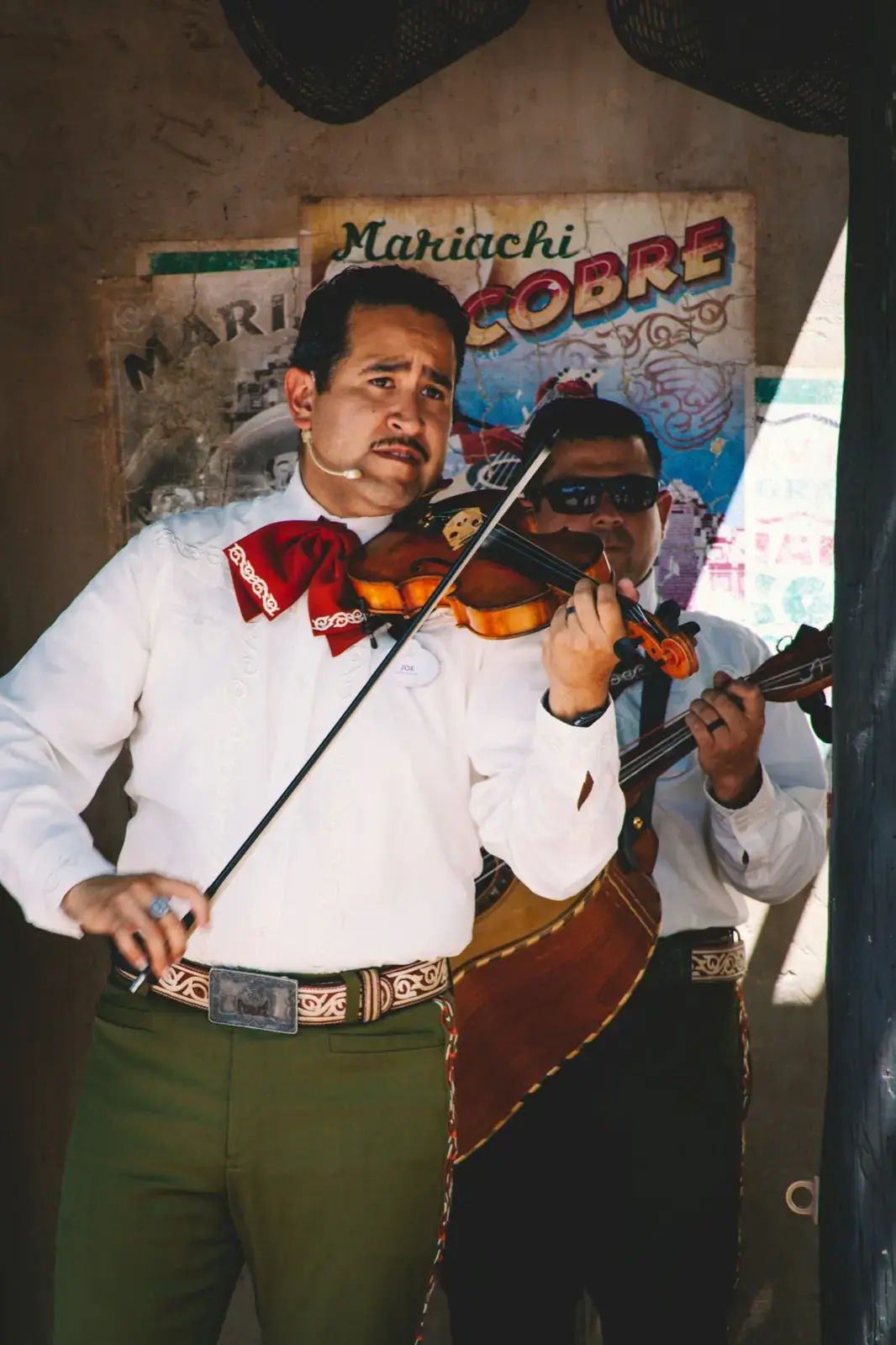
You’re sitting at a restaurant, chatting with friends while waiting for dinner. Around you, glasses clink, conversations blend together, and waiters weave between the tables. Then, without warning, several musicians in black charro suits embroidered with silver and wide-brimmed sombreros stop beside your table.
One raises a trumpet. Another strums the first chord on his guitar.
Within seconds, music fills the restaurant.
No one announces the beginning of a performance. No one asks the audience to take their seats. It all feels so natural, as if the music had always been part of the evening.
A few minutes later, the song ends. The musicians smile, collect their payment, and move on to the next table.
Almost everywhere in the world, people go to hear music.
In Mexico, music comes to the people.
Best time to go: Year-round, evenings. In Mexico, you don't go looking for music. Trumpets and violins in silver-embroidered suits find you instead, one song at a time.
Why Mariachi Doesn’t Belong on a Stage
This is often what surprises visitors the most.
Mariachi is rarely associated with concert halls. Its natural home is a town square, a restaurant, a courtyard, a family celebration, or someone’s front door.
That’s how the tradition developed.
Mariachi musicians were never meant to perform only for formal audiences. They were invited to accompany life’s important moments—weddings, community celebrations, and family gatherings. As more musicians moved to Mexico’s cities, they naturally began gathering in places where people could find them. The most famous of these became Plaza Garibaldi in Mexico City.
Nothing begins on schedule there.
Instead, the evening begins with waiting.
Dozens of mariachi groups stand together, chatting, tuning their instruments, and waiting for the next person who needs a song.
Music doesn’t start because the clock says it should.
It begins when someone simply says, “Play something for us.”
How to Order Your Own Concert
It sounds more complicated than it really is.
In fact, it’s remarkably simple.
You choose the mariachi group you like—or sometimes they approach you first. You agree on the price, request a song, or simply ask them to play something that suits the occasion.
Seconds later, your private concert begins.
There are no tickets. No stage. No programme.
Just a handful of musicians playing for you.
A single song typically costs around 150–250 Mexican pesos, although prices vary depending on the location, the size of the group, and the occasion. If you’d like several songs or want the musicians to perform at your home or a private event, the price is arranged in advance.
The one rule worth remembering is simple: always agree on the price before the music begins.
Music for the Moments When Words Aren’t Enough
From the outside, it might seem as though mariachi exists mainly for tourists.
Spend a little more time in Mexico, however, and you quickly realise that visitors are far from the tradition’s most important audience.
Mariachi musicians are invited to birthday celebrations, weddings, quinceañeras, Mother’s Day gatherings, family reunions, romantic serenades, and sometimes even funerals.
In every case, people are not simply paying for entertainment.
They’re asking musicians to express something that feels too important for ordinary conversation.
The same melody can become a declaration of love, a thank-you to a mother, a birthday gift for a friend, or a final farewell to someone who has passed away.
The music becomes part of the conversation.
Only this time, the words are spoken through trumpets, violins, and guitars.
Where to Experience Mariachi for Yourself
If you’d like to experience this tradition firsthand, there is no better place to begin than Plaza Garibaldi in Mexico City.
Every evening, mariachi groups gather there waiting for their next performance. You can simply wander through the square, listen to the music, watch one group replace another, or choose an ensemble and request a song of your own.
It’s worth knowing what to expect.
Garibaldi is lively, noisy, and sometimes chaotic. Several groups may be performing at the same time, and some musicians will approach visitors to offer their services.
Yet that’s exactly what makes the place feel authentic.
The music isn’t following a script. It’s simply happening around you.
If you prefer a quieter introduction, many traditional restaurants feature live mariachi performances during dinner, offering a more relaxed atmosphere while preserving the same tradition.
What UNESCO Actually Recognised
In 2011, UNESCO added mariachi to its Representative List of the Intangible Cultural Heritage of Humanity.
Importantly, UNESCO did not recognise a particular song or the famous charro costume.
It recognised a living tradition that continues to accompany family life, public celebrations, and community events, while being passed from one generation to the next.
That’s why mariachi cannot be experienced only in a museum.
The tradition is still alive exactly where it has always belonged—among people.
Where the Music Goes Next
A few minutes later, the final note fades away.
The musicians thank you, adjust their instruments, and walk off.
Their evening isn’t over.
They’re simply looking for the next person who needs a song.
Perhaps that’s what makes mariachi unlike almost any other musical tradition in the world.
In many countries, music waits for people to come and hear it.
In Mexico, it goes out looking for them.