The evening in Lisbon unfolds like any other.
At one table, friends are debating which wine to order. At another, someone bursts into laughter. Waiters weave between the tables carrying plates, glasses clink, conversations overlap. It feels like an ordinary restaurant where people have come for a good meal after a long day.
Then the lights soften.
A waiter who was about to take an order pauses. The conversations fade. A musician picks up a small pear-shaped guitar, brushes its metal strings—and within seconds the lively dining room becomes a place where every word of the singer can be heard.
No one asks the guests to be quiet.
No one has to.
People simply know: fado has begun.
A few minutes later, the song ends. Gentle applause rises through the room. The waiters resume serving dinner, conversations return as though nothing unusual had happened.
Until the next song begins.
For many first-time visitors, this is the most surprising part of the evening. Not the music itself, but the respect it commands from dozens of strangers.
What kind of tradition can make an entire restaurant willingly stop talking?
Best time to go: Year-round, evenings. In Lisbon's fado houses, a single note is enough to silence an entire room mid-conversation — no announcement required.
The Music That Became Lisbon’s Voice
Fado is impossible to understand if you think of it as simply another style of Portuguese music.
It is part of Lisbon itself.
The genre took shape during the first half of the nineteenth century within the city’s everyday life—in taverns, cafés, courtyards, streets, and working-class neighbourhoods. Sailors, craftsmen, merchants, migrants, musicians, and people living on the margins of society all contributed to the world from which fado emerged.
That is why its origins are more complex than the familiar story of sailors leaving for sea while women waited on shore.
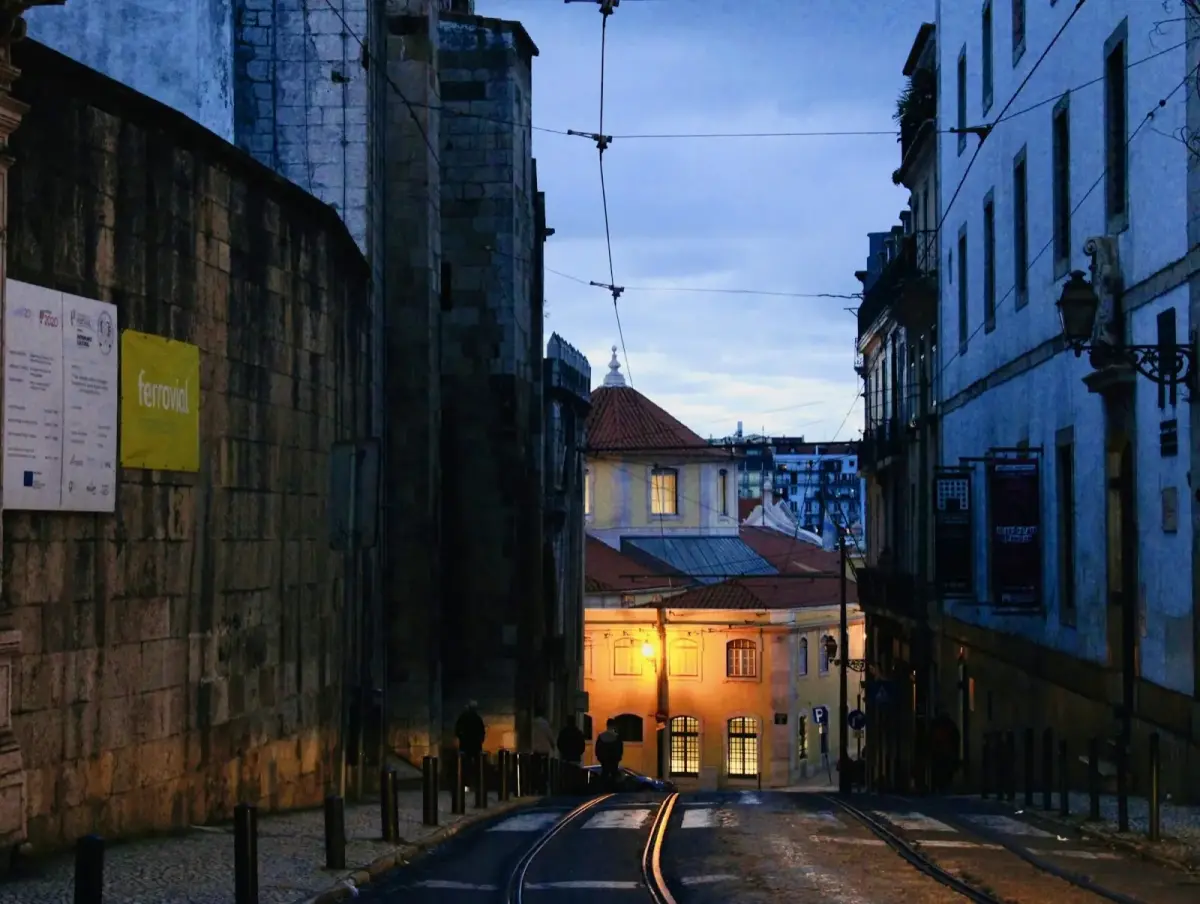
Historians believe that fado developed through the meeting of several musical traditions that converged in Lisbon. Over time they evolved into something entirely new: an urban music so deeply connected to the Portuguese capital that it is difficult to imagine it without the narrow streets, worn stone staircases, and old houses of districts such as Alfama and Mouraria.
As the years passed, fado spread throughout the city. Dedicated fado houses appeared, professional performers built their careers, and new generations learned the tradition.
Yet its essence remained the same.
Fado never tried to decorate Lisbon.
It became one of the ways the city tells its own story.
That is why UNESCO added fado to the Representative List of the Intangible Cultural Heritage of Humanity in 2011. The recognition was not only for its music, but for a living tradition that continues to shape everyday life in Lisbon.
A Few Minutes That Bring Everything Else to a Halt
If you have never experienced fado before, you might expect an ordinary concert.
The reality feels very different.
The performers are usually few in number. A singer stands beside two musicians: one playing a classical guitar, the other a Portuguese guitar. The latter is unlike the instrument most people imagine. Smaller than a standard guitar, with twelve metal strings arranged in pairs, it produces a bright, shimmering sound that is instantly recognisable.
The evening unfolds in short musical sets.
Guests eat, talk, and enjoy their meal while the restaurant hums with conversation. Then the service pauses for a few minutes, the musicians begin to play, and the restaurant quietly transforms into a concert hall.
During the song, people do not hold conversations, walk between the tables, or use flash photography. In smaller venues the singer may perform without a microphone, making even the brief breath before the first line part of the experience.
What is most striking is how naturally it happens.
There are no stern announcements or strict instructions.
Everyone simply understands that, for the next few minutes, nothing matters more than the music.
When the song ends, the silence disappears almost instantly. Conversations return, glasses clink, waiters continue serving dinner.
And then, a little later, it happens all over again.
That is when you realise that the true power of fado lies not only in its melodies or its remarkable singers.
Its greatest achievement is that, for a few minutes, it can make ordinary life stop.
More Than Just Sad Songs
There is one Portuguese word that appears whenever people try to explain fado: saudade.
It is often translated as longing, nostalgia, or a deep sense of missing something that cannot be brought back. None of these words is completely wrong, but none captures its full meaning either.
That is why many visitors leave Lisbon believing that every fado song is about heartbreak.
It is not.
Some songs speak about love. Others tell stories about poverty, a particular street, childhood memories, the city itself, or the strange turns of fate that shape ordinary lives. Some are filled with quiet melancholy, while others carry pride, humour, or even defiance.
The emotion changes from song to song, but one thing remains the same.
Every performance feels intensely personal.
Even if you do not understand a single word of Portuguese, you can often sense whether the singer is remembering someone, arguing with destiny, celebrating a neighbourhood, or telling a story that has been lived many times before.
Reading the translation of just one song before your evening begins can completely change the experience.
Suddenly you are no longer listening only to a beautiful voice.
You are listening to someone’s story.
Three Ways to Experience Fado
Many guides divide fado into “real” and “tourist” performances.
The reality is much less simple.
There are several ways to experience fado, and each offers something different.
A traditional fado house
This is the experience most people imagine.
You reserve a table, enjoy dinner, and throughout the evening the restaurant repeatedly falls silent as musicians perform between courses. The atmosphere develops slowly, making music feel like part of the evening rather than a separate event.
Historic fado houses are often the most atmospheric, but they are also the most expensive and usually require advance reservations.
A concert
Some venues focus almost entirely on the music.
Instead of combining dinner with several performances, you simply attend a concert lasting about an hour. It is often the easiest introduction for first-time visitors, especially if you want to concentrate on listening rather than planning a long evening around a restaurant reservation.
Fado vadio
This is the most spontaneous form of fado.
Rather than following a carefully prepared programme, different singers may step forward throughout the evening. Some are experienced performers, others are enthusiastic amateurs. You never know exactly what you are going to hear.
That unpredictability is part of the tradition.
If you want to understand why UNESCO recognised fado as living heritage rather than simply a musical genre, evenings like these reveal the answer.
Is It Worth Going If You Don’t Speak Portuguese?
Absolutely.
Understanding Portuguese certainly adds another layer to the experience, but it is not a requirement.
You will still hear the pauses between phrases, the tension in the singer’s voice, the bright sound of the Portuguese guitar, and the remarkable silence that fills the room whenever a song begins.
Fado is not built on spectacle.
There are no elaborate stage effects, dramatic lighting, or choreographed performances competing for your attention.
Instead, everything depends on a single voice and a room willing to listen.
That is exactly why it is not for everyone.
If you expect a lively dinner show with constant entertainment, fado may feel too quiet. Too restrained. Too slow.
But if you enjoy experiences that ask you to stop, listen, and become part of the atmosphere yourself, an evening of fado can easily become one of the most memorable nights of your visit to Portugal.
When the Music Ends
Eventually the last song finishes.
The applause fades. Glasses are filled once again. Conversations slowly return to the room, and the restaurant becomes an ordinary restaurant once more.
The transformation lasts only a few minutes.
Yet those few minutes explain more about Lisbon than many museums ever could.
Fado was born among the noise of a busy port city.
Perhaps its greatest achievement is that, even today, it still has the power to make that city fall completely silent.