At four o’clock in the morning, Basel goes dark.
Not because of a power outage. Not because the city is still asleep. Quite the opposite—by that hour, thousands of people are already standing in the narrow streets of the Old Town. They arrived long before dawn, waiting patiently for a single moment.
The clock strikes four.
The streetlights go out all at once.
A second earlier there were illuminated shop windows, historic façades, and glowing signs. Now they are gone. Only silhouettes remain, along with a few seconds of complete darkness.
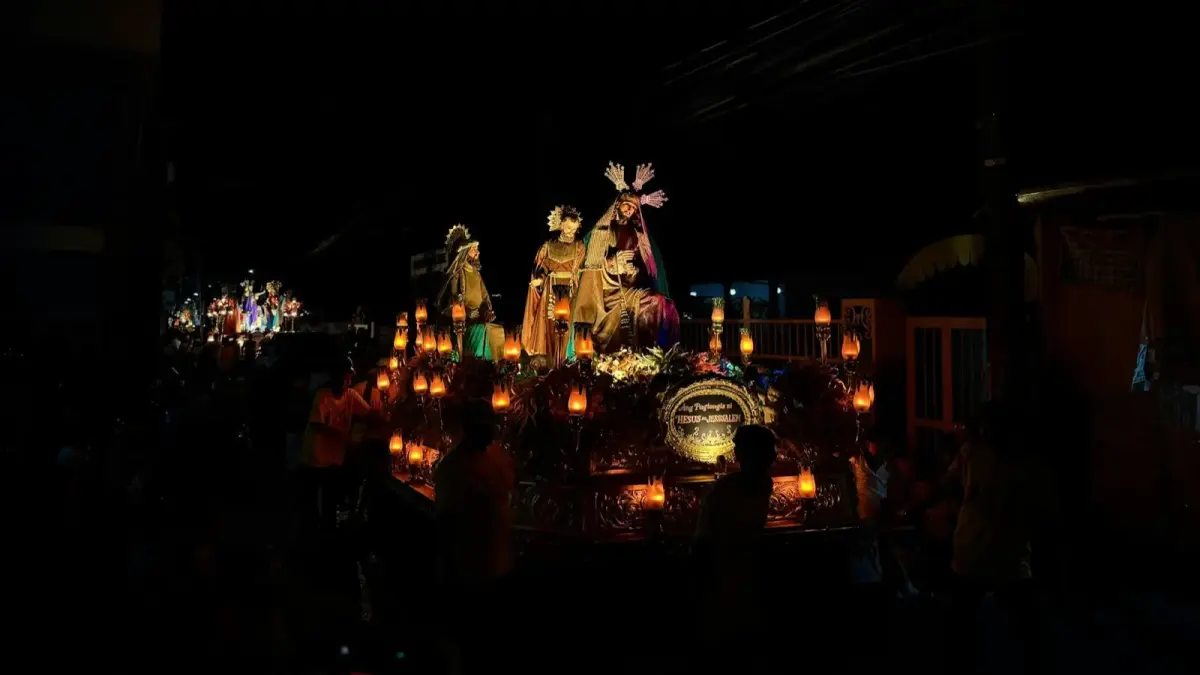
Then lights begin to appear from different corners of the old city.
First one.
Then a few more.
Within a minute, there are hundreds.
Out of the darkness emerge enormous hand-painted lanterns, accompanied by the sound of piccolos and drums. There are no floodlights, no fireworks, no loud announcement declaring that the celebration has begun. Instead, it feels as though the city has deliberately stepped aside, allowing the carnival itself to slowly bring the light back.
This is how Basler Fasnacht begins—the carnival that UNESCO has recognized as Intangible Cultural Heritage of Humanity.
And perhaps the most unusual carnival in Europe.
Best time to go: Monday after Ash Wednesday, 72 hours. At four in the morning the lights of Basel go out. Then, out of the darkness, the strangest carnival in Europe slowly switches them back on.
The Carnival That Arrives After All the Others
Across most of Europe, carnivals take place before Lent. They are the final days of celebration before the season of fasting begins. Then Ash Wednesday arrives, and life returns to normal.
Basel does something different.
It waits.
Only on the Monday after Ash Wednesday does the city begin its seventy-two hours of celebration. While other cities have already packed away their costumes and dismantled their stages, Basel’s musicians are only just gathering.
Historians still debate exactly why the dates evolved this way. Fasnacht grew out of a blend of medieval traditions, the Reformation, local customs, and centuries of the city’s own history. But for someone experiencing it for the first time, one fact matters more than any historical explanation.
While the rest of Europe has already said goodbye to carnival, Basel is only switching off the lights.
That is why the opening of Fasnacht feels so powerful. It doesn’t seem like the end of carnival season—it feels like stepping into a world that follows its own rules.
Seventy-Two Hours of a Different Life
After Morgestraich, Basel doesn’t wake up.
It transforms.
As daylight slowly returns, it becomes clear that the city no longer belongs to ordinary life. Masked figures continue walking through the streets. Drums echo somewhere nearby. Turn one corner and another group of musicians appears. A few minutes later they disappear, only to be replaced by another procession.
It is almost impossible to create an itinerary that lets you see everything.
The carnival doesn’t pass in front of you.
It surrounds you.
Later in the day comes the large Cortège parade. Along its official route move dozens of groups, enormous painted lanterns, decorated floats, musicians, satirical figures, and costumes whose meaning often depends on local politics.
Yet even then, Fasnacht feels unlike most famous carnivals.
There is no sense that everything revolves around one main stage.
Instead, the entire city becomes the stage.
Walk into a quiet alley and you’ll still hear music. Cross a small square and another group has just begun to play. Minutes later, masked figures emerge from another street, seemingly following their own rhythm, independent of the larger parade.
Because of this, wandering through Basel feels less like watching a scheduled performance and more like constantly discovering new scenes.
This is how most locals experience Fasnacht.
Not by following a timetable.
Simply by moving through the city.
A Year of Preparation for Three Days of Chaos
At first glance, everything appears completely spontaneous.
As though thousands of people simply decided to put on costumes, walk into the streets, and start playing music.
In reality, almost nothing is accidental.
Most participants belong to Cliquen—traditional carnival societies. Many have existed for decades, while some date back more than a century. Throughout the year they choose a theme, design costumes, paint the giant lanterns, rehearse the music, and prepare every detail of their appearance.
For many people in Basel, Fasnacht does not last three days.
It lasts all year.
In many families, children begin taking part almost from birth. Later they join youth groups before eventually becoming members of the adult Cliquen. In this way, the tradition is passed from one generation to the next.
That is why the carnival feels so complete.
It was never created for tourists.
It was created by people who live it themselves.
Watching a procession, it is difficult to imagine how many months of preparation lie behind just a few minutes of music.
Yet that preparation is precisely what allows the city, for three extraordinary days, to look as though everything is happening effortlessly.
Why This Carnival Feels Unlike Any Other
The first thing that surprises most visitors isn’t the costumes.
It’s the mood.
Many famous carnivals are built around celebration, dancing, colour, and spectacle. Basel certainly has costumes, masks, music, and confetti, but none of them feel like the main event. Instead, everything seems to revolve around an idea.
Every traditional group chooses its own annual theme, known as a Sujet. Sometimes it reflects international politics. Sometimes it satirises local events. Sometimes it pokes fun at famous personalities or life in Basel itself.
That idea then appears everywhere.
On the giant painted lantern.
On the masks.
On the costumes.
On the decorated floats.
Even in the songs and satirical verses performed throughout the city.
For three days, Basel turns into a giant illustrated newspaper.
Except the headlines are painted by hand, carried through medieval streets, and accompanied by the sound of piccolos and drums.
Many of the jokes inevitably remain hidden from foreign visitors. Some are written in the Basel dialect. Others refer to events only locals immediately recognise.
Surprisingly, that rarely diminishes the experience.
You don’t need to understand every joke to realise that this carnival isn’t trying to entertain tourists. It is a conversation that the city has with itself, and visitors are simply invited to witness it.
That authenticity is one of Fasnacht’s greatest strengths.
If You’re Visiting for the First Time
The most common mistake is assuming that the carnival can be experienced in a couple of hours.
It can’t.
The opening at four in the morning is unforgettable, but it is only the beginning.
If you have just one day, arrive the evening before. Wake up early for Morgestraich, spend the morning wandering through the Old Town, watch the afternoon Cortège, and return to Münsterplatz after dark to see the illuminated lanterns up close.
This gives you the complete rhythm of Fasnacht in a single day.
If you stay for a second night, the atmosphere changes again. Tuesday belongs to Guggenmusik—loud brass bands that fill the streets and squares with an entirely different sound. The city becomes noisier, livelier, and less ceremonial than it feels during Morgestraich.
Dress warmly.
Four o’clock in the morning in February is cold, and much of the experience happens outdoors. Comfortable shoes are just as important, because the best way to experience Fasnacht is simply to keep walking.
Avoid using a camera flash during Morgestraich. It breaks the atmosphere and distracts the musicians moving through the darkness.
And if you see the official carnival badge for sale, buy one. It isn’t a souvenir designed for tourists—it helps support the people who keep this centuries-old tradition alive.
Is Fasnacht Right for You?
Fasnacht is worth the journey if you’re fascinated by places where tradition still shapes everyday life.
If you enjoy wandering through cities without a strict itinerary.
If you appreciate handmade craftsmanship, unusual music, and cultural traditions that have grown naturally over centuries rather than being designed as performances.
It is also one of Europe’s most rewarding festivals for photographers. The contrast between darkness, lanterns, masks, and medieval streets creates scenes unlike almost anywhere else.
On the other hand, Fasnacht may not be the experience you’re looking for if you expect a sunny street party full of dancing and tropical colours.
You’ll be standing outside before dawn.
You’ll be surrounded by crowds.
Some of the humour will remain inaccessible unless you understand the local dialect.
And yet, none of that feels disappointing.
Because people don’t travel to Basel simply to watch a carnival.
They travel to witness a city willingly abandon its ordinary rhythm for seventy-two hours.
Many festivals make a city brighter.
Basel begins by turning out the lights.
Only then does the celebration slowly bring them back.