Across most of the world, domesticated animals are raised in much the same way. They live on farms, are fed, treated, and sold. But far beyond the Arctic Circle, another way of life still exists—one where people do not “own” a herd in the way most of us understand ownership.
Here, the lives of people and reindeer are so closely intertwined that separating one from the other is almost impossible.
Best time to go: Migration seasons, spring & autumn. Beyond the Arctic Circle, some families don't own a herd of reindeer so much as move in rhythm with one.
A Reindeer Is Not a Farm Animal
When people imagine a herd of reindeer, they often picture something similar to cattle or sheep. In reality, a reindeer spends most of its life much like a wild animal.
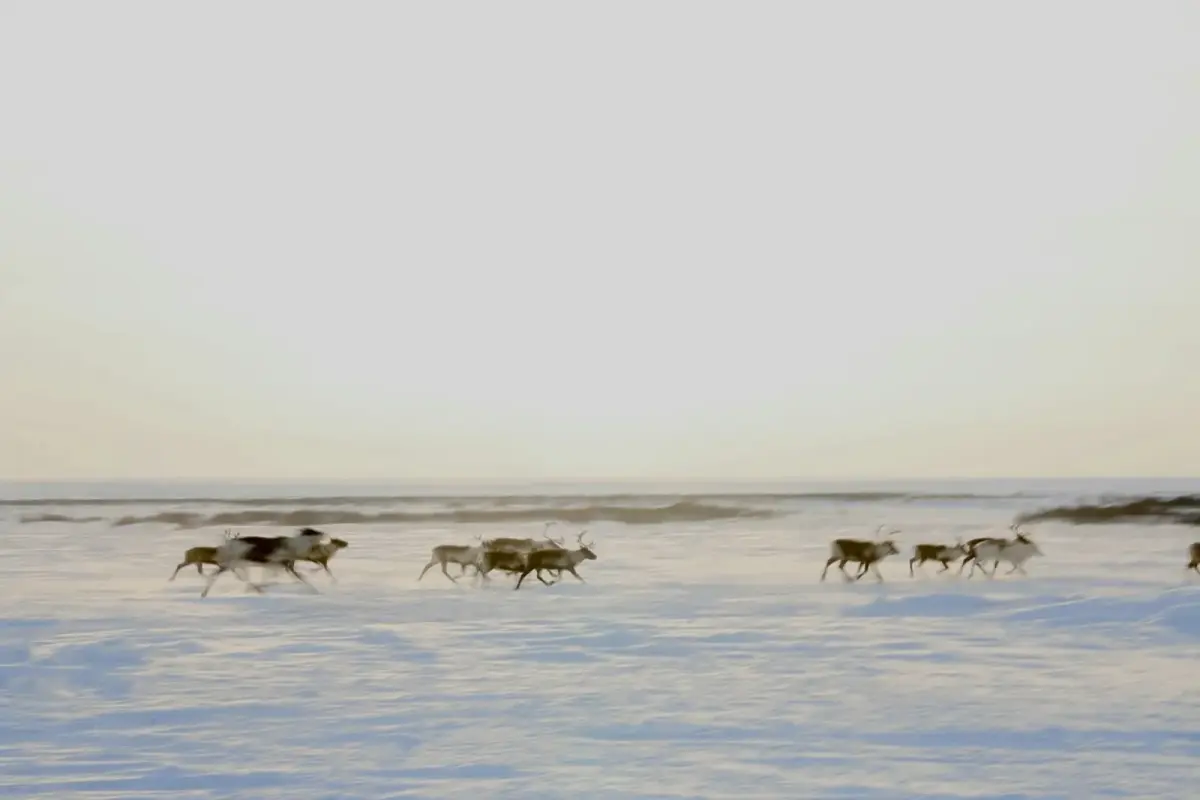
It travels hundreds of kilometres across the tundra, digs through snow to find food, swims across rivers, and senses an approaching blizzard long before people do. The herder’s role is not to control every animal but to move with the herd, understand its behaviour, and make decisions alongside nature rather than against it.
That is why reindeer herding is often described not as a profession, but as a way of life.
The Reindeer Knows the Way
Migration routes have been followed for centuries. In spring, the herds move towards the coast or into the mountains. During summer, they seek relief from insects. In autumn, they return to their winter grazing grounds, where lichen lies hidden beneath the snow.
Every migration depends on an intimate understanding of the landscape, river conditions, wind direction, snow depth, and countless other details that no map or GPS can reveal.
This knowledge can only be passed on by living it.
Reading the Snow
To most people, snow is simply snow.
To an experienced reindeer herder, it tells an entire story. The texture reveals how easily the animals will reach the lichen beneath. A layer of ice determines whether their hooves can break through to the food below. Tracks in the snow show whether another herd has passed recently, whether wolves are nearby, or whether the animals have changed direction.
It is a language that cannot be learned in a few weeks.
Carrying an Entire Home
During seasonal migrations, families move with almost everything they own.
Their portable home, clothing, tools, cooking equipment, and food are packed onto sledges pulled by the reindeer themselves. When the herd reaches a new grazing area, a camp can appear within hours. A few weeks later, it disappears just as quickly, leaving almost no trace behind.
For generations, this has been the rhythm of life for the Sámi, Nenets, Evenki, Dolgans, and many other Indigenous peoples of the North.
The Reindeer Provides Far More Than Food
Almost every part of the animal has a purpose.
Its hide becomes exceptionally warm clothing and footwear capable of withstanding Arctic winters. Antlers and bones are crafted into tools and household objects. Sinew serves as remarkably strong thread. Even traditional homes and methods of travel evolved around the needs and movements of reindeer herds.
When reindeer herding disappears, countless other traditions disappear with it.
Why UNESCO Protects This Tradition
UNESCO’s Intangible Cultural Heritage List does not protect the animal itself, nor the technique of raising it.
Instead, it safeguards something far more fragile: the knowledge, skills, and relationships that connect people, reindeer, and the Arctic landscape. It protects the ability to choose the right route, understand the behaviour of the herd, read the snow, build a life around seasonal movement, and pass that knowledge from one generation to the next.
Once this knowledge is lost, no book can truly bring it back.
A Culture That Moves with the Herd
Today, many young people from Arctic Indigenous communities leave for towns and cities. The climate is changing, migration routes are becoming less predictable, and traditional ways of life are steadily giving way to the modern world.
That is why UNESCO believes it is not enough to preserve songs, clothing, or craftsmanship alone. Sometimes, what must be protected is an entire way of living.
Because when the last migrating herd is gone, the world may lose far more than reindeer. It may lose a way of seeing nature—one in which people lived not in opposition to the land, but in rhythm with it.
Where to Experience This Way of Life
Seeing a reindeer is easy. Seeing a world where the reindeer shapes the rhythm of human life is much rarer.
There are still a few places in the North where this way of life continues, but each offers a different window into the tradition.
If you want to spend a day with reindeer herders, head to Lapland
In northern Norway, Sweden, and Finland, many Sámi families continue to practice reindeer herding. Here, you can do more than simply watch the animals. You can spend time with people for whom seasonal migrations, caring for the herd, and life on the tundra remain part of everyday reality rather than a reconstruction of the past.
For many travellers, this is the best introduction to the culture of the Arctic’s Indigenous peoples.
If you want to understand how this way of life works, choose Norway
Around Karasjok and across Finnmark, Sámi culture remains especially vibrant. Alongside opportunities to meet reindeer herders, the region is home to museums and cultural centres that reveal something much deeper: reindeer herding is not simply a profession, but an entire system of knowledge passed from one generation to the next.
After a journey like this, even a small herd crossing the road begins to look very different.
If you want to experience nomadic life rather than a tour, visit the Russian Arctic
Across Yamal, Taymyr, Yakutia, and Chukotka, many Nenets, Dolgan, and Evenki families still travel hundreds of kilometres with their herds during seasonal migrations.
This is not a tourist attraction but an opportunity to step into a way of life where the day’s rhythm is set not by the clock, but by the movement of the herd, the weather, and the changing conditions of the tundra. These journeys require careful planning, but they offer perhaps the clearest understanding of what UNESCO is truly trying to protect: not an ancient tradition, but a living culture.
Which Destination Is Right for You?
If this is your first encounter with reindeer herding, Lapland is the ideal place to begin. The tradition is accessible, well interpreted, and easy to experience without complicated logistics.
If, however, you hope to witness a genuinely nomadic way of life that has endured for centuries, the Russian Arctic offers the deepest experience. It is here that you begin to understand that reindeer herding is not really a story about animals. It is a story about people who learned to live in rhythm with the North.